But he also said that the time “for large scale economy‑wide emergency support is over”.
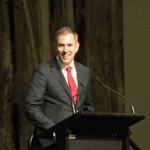
“Australia’s SME sector has shown remarkable resilience and now are at the heart of our economic recovery,” Treasurer Josh Frydenberg said.
“We have been very careful throughout this crisis that we’re faced with the pandemic to ensure that our measures are temporary and are targeted. [But] when the economy recovers we end those immediate emergency crisis settings.”
He said that it is now time fiscal settings be normalised, and the government has already “drawn some clean” lines.
“We ended JobKeeper in March last year. At the time it was costing the taxpayer more than $2 billion a month,” he said.
“With our tight labour market and our strong economic recovery, continued support at those levels would do more harm than good. It would risk putting further pressure on inflation, interest rates and cost of living.”
However, Mr Frydenberg did concede with rising inflation, the increasing cost of living, and the rapid hike in fuel prices the Government will be sweetening its Budget next week with some short-term incentives.
The government is facing calls to ease the financial pressure being created by rising petrol prices, including by cutting or freezing the fuel excise and extending the low and middle income tax offset (LMITO) for another year.
Mr Frydenberg declined to confirm whether or not the LMITO will be included in the 29 March budget when asked, but reiterated that some temporary measures will be in the mix.
“International factors, including rising global oil prices and shipping costs have seen our inflation rate rise to 3.5 per cent,” he said.
“While inflation in Australia is less than half of the 7.9 per cent seen in the United States and well below that of the United Kingdom, Canada, Germany and New Zealand, cost of living pressures are real.”
The Budget, he hinted, will include “further measures to support families to meet the cost-of-living pressures, in a targeted and proportionate way”.
According to the Australian Financial Review, this could come in the form of one-off payments to low and middle-income earners, pensioners and welfare recipients.
“The recovery will also continue to be supported by significant fiscal support already in the system, household and business balance sheets are substantially stronger than before the pandemic,” Mr Frydenberg said.
“There is now an additional $251 billion accumulated on household balance sheets and a further $182 billion on business balance sheets that was not there at the start of the pandemic.
“This will continue to provide confidence for people to spend and invest to the benefit of the broader economy.”