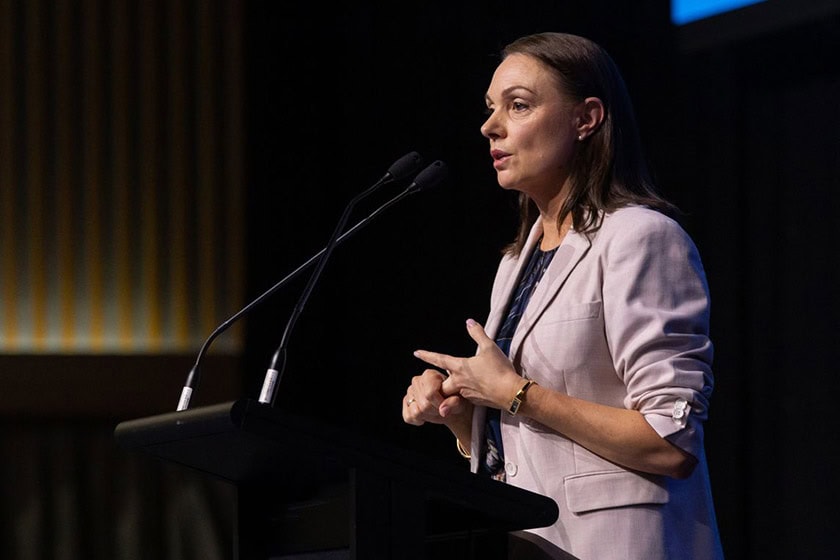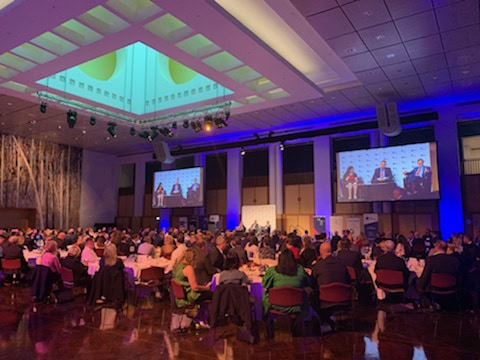
It was a strong message to the Australian Taxation Office, and big news for taxpayers and the accounting sector regarding the treatment of trusts, from Assistant Treasurer Michael Sukkar and shadow assistant treasurer Stephen Jones, who confirmed both parties will address the issue of potential retrospectivity of s100A.
Section 100A has attracted significant attention among tax advisers in recent years. While the section has been a part of the Australian taxation landscape since 1979, it appears only fairly recently that it has become an area of significant focus within the ATO.
When introduced, s100A was designed to counter tax avoidance arrangements that were aimed at ensuring that a beneficiary was presently entitled to income of the trust estate (relieving the trustee from paying tax on that income) in circumstances where the presently entitled beneficiary would also be relieved from paying tax on the income.
For s100A to apply, there are a number of key requirements:
- A beneficiary must be presently entitled to income of a trust estate.
- The beneficiary’s entitlement must arise out of a “reimbursement agreement” – an agreement that provides for the payment of money, transfer of property or provision of services or other benefits to a person other than the beneficiary, in circumstances where the purpose of one of the parties to the arrangement was to ensure that the tax liability of the person who would otherwise have received the income was reduced.
- Where s100A applies, the beneficiary is deemed not to be entitled to the income distributed to it, rather the trustee is assessed on that income at the top marginal rate.
One important outcome of s100A is that there is no limited amendment period in relation to assessments made pursuant to the section. While the Commissioner will often only seek to apply s100A in relation to a four or five-year period, there is no statutory impediment to further assessments should the ATO consider it appropriate in the circumstances. Therefore, not only is the applicability of the section extremely wide, it can potentially result in significant financial detriment.
Mr Sukkar said he was aware of the issues associated with s100A and the interpretations of the ATO.
“At first instance, as Minister responsible for the ATO, we always try to achieve and encourage the independent ATO to arrive at sensible outcomes for taxpayers,” he said.
“We’re looking at it very closely, I think any change, not that the ATO would describe it as a change, any change of interpretations that has an adverse impact on legacy structures and legacy transactions we would be minded to address.
“I don’t want to make that commitment rock solid other than [to say] we are looking very closely at it and to remove some of the unintended consequence of that change in interpretation. If that can’t be done administratively, then potentially legislatively, I am looking at it very closely.”
Both Mr Jones and Mr Sukkar were also asked during the breakfast Q&A session about a number of other concerns the industry had within the scope of the new budget.
Mr Jones defended his party’s lack of information on issues such as the limit on the threshold for tax deductibility of tax advice at $3,000, saying that if the Labor Party had not made any announcement on the topic “we’re not doing it”.
“And we won’t be announcing it. I’ve seen them and it’s not on our list,” he said.
“[On the questions about] all of our policy announcements, Anthony Albanese has a speech on Thursday night (31 March), the Budget Speech in Reply, we will be spending the next five weeks from then until the 14 May which is my hot tip for when the election will be, laying out the rest of our policies, certainly well in advance of where we have to do that for the pre-election costings.”
However, Mr Jones did concede that financial advice reforms were an issue on which the ALP “need to lean in to”.
“In my own portfolio, the payments space is absolutely in need of reform. These touch and go devices have transformed our payments system. The second area that is absolutely in need of reform is financial advice; the market is cooked.
“Five years of failed reforms by the government; they’ve made an absolute mess in the financial services space, it needs to be reformed. People have never retired with more money but less capacity to get more advice.
“So, there’s about three or four things we need to do. We’ll be looking at it through the prism of what’s in it for the customer, there’s some things we need to do at the profession side of things; I see that as low-hanging fruit, which is sorting out the qualifications mess, giving some clarity around remuneration, easy stuff to do and we should do that very quickly.
“That will sort the problem for high-net-worth individuals, basically and those on the cusp of high net worth. At the other end, it’s financial counselling. But in the middle, where the vast majority of Australians live, we need new solutions, new market designs and we want to put regulations in place which encourage that and working with the profession and industry to do that.”