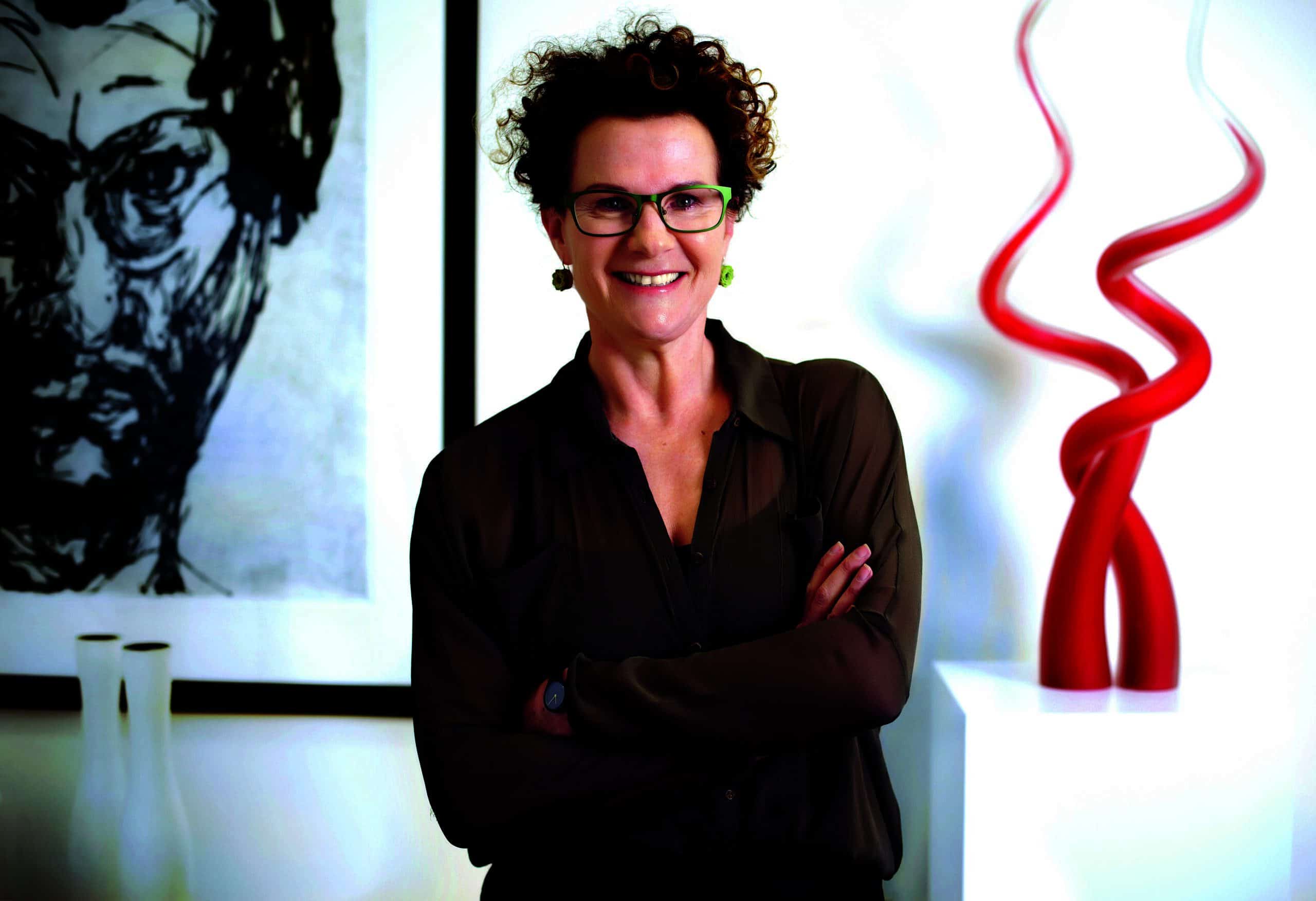

Carol Schwartz is founding Chair of the Women’s Leadership Institute Australia
You believe supporting the community also has positive flow-on effects for business. Is that right?
It’s all around the shared values concept, which makes absolute sense. How do you create the community that you’re working in as a business? You create the prosperous community around you so you’re creating the prosperous customer.
What satisfaction do you get from your community and philanthropic work?
I use Our Community again as an example. As investors, 12 years ago four of us invested $250,000 each, and there was a lot of investment by others of sweat equity. We have over the past decade not taken any money out in financial dividends – we’ve been measuring our return in terms of what we’ve been able to add back to the community sector. For example, when we quantified the amount of resources we’ve put in, it’s more than $15 million of value. That’s incredible and the results of being able to build capacity in the community sector are just enormous. And to be part of that transformation is phenomenal.
How do social enterprises balance the objectives of making a profit versus serving the needy?
The fact that one produces a profit is not mutually exclusive from being a great social enterprise – and, in fact, I would suggest that profits are crucial because otherwise you’re not sustainable.
You are also passionate about women’s advancement in business, and your public comments suggest you are depressed about the low number of women on boards and in senior management positions.
I’d rather use the word enraged. I talk about quotas all the time because there’s no paradigm shift. We need a paradigm shift to get more women in leadership roles and the way to do that is by putting quotas on boards. I don’t understand why people believe that the concept of quotas and merit are mutually exclusive. Why would anybody – a chairman or a board – promote someone who wasn’t meritorious? You’d have to be nuts. I believe the pool of meritorious women is very large but unfortunately untapped, and if we created an environment where we had mandatory quotas to get those women on those boards, we would have fabulous contributors to boards in this country.
You sit in many boardrooms and promote the importance of greater diversity. What reaction do you get?
Sometimes there can be eye rolling and the bored look of ‘here she goes again’. But you know what? I’m relentless on this because I really believe in it. There are so many good women out there who could sit on many of the corporate boards at the drop of a hat who are just not being given that opportunity.
You set up the Women’s Leadership Institute Australia to help address this dearth of women in senior management positions. What does the group do?
We’ve set up a women-for-media database and we track journalists who are interviewing women as thought leaders and commentators on our political, business and commercial issues. When we see there are no women interviewed, we contact the journalist and ask them to have a look at our database – we have, say, four women you could have contacted as a commentator on those issues. We are vigilant around this and I think we will start to make a difference when we see more women being included as thought leaders and commentators in the media. They will get more exposure and therefore will not be so under the radar when board positions are being advertised.
In your 20s, you set up a dance studio in Melbourne to tap into the popularity of the aerobics craze led by actor Jane Fonda. Was that the most fun you’ve had in business?
It was great fun, but I was 23 at the time and a law graduate who decided after doing my articles that I definitely did not want to be a lawyer. So, I started an aerobics and dance studio and loved that. I also did small property developments on my own in my late 20s. I worked in legal publishing with my husband when he was building up his business, which I really enjoyed. Our Community has been a fantastic experience for me … I’ve had a really diverse, exciting, stimulating, fearful business life. I’ve been in lots of situations that have been completely nerve-racking – it looks like your business is teetering on the edge and everything you’re doing is a mistake, but those are the situations we all learn from. We take our successes for granted. It’s our failures we learn more from.