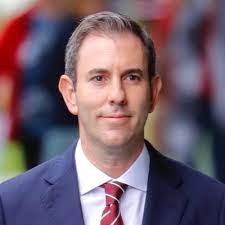
Jim Chalmers said as well as some extra cash that has been found, Tuesday’s (25 October) budget will be the first “wellbeing” budget delivered in Australia, taking its lead from other countries where more than GDP is measured.
Speaking to ABC Radio on Monday (24 October), the Treasurer said ahead of Tuesday’s (25 October) budget that half of that $22 billion has been found in savings and the rest will be accumulated in the timing of the government’s spending — or in economic jargon “re-profiling spending”.
“What that means is, whether it’s big projects or other commitments, finding a way that we can still deliver it on a slightly slower time frame that improves the budget in the near‑term but it’s also a bit more realistic,” he said.
“Some of these big projects that have been promised around Australia over the course of the last few years, because we’ve got shortages of building materials and shortages of labour, we’ve been working with the state governments to see whether we can time some of those projects a bit more intelligently, and that delivers a saving to the budget in the near term.”
Mr Chalmers has also said this budget will be a “wellbeing” budget, focusing not just on inflation and wages, but on all factors that affect the wellbeing of a country including environmental issues, the state of the health of the population and the state of its mental health.
The concept of measuring the wellbeing of a nation based on more than its GDP has been suggested as a way to look more deeply at the overall health of a nation rather than its economic health.
“A lot of countries with which we compare ourselves, they have some version of a wellbeing budget or what I call ‘measuring what matters’ and basically, what it is, is it says we’ve got all these ways we measure the economy and they are very important and we’re not going to walk away from them, but in addition to that, let’s come up with a hard‑headed, consistent way to measure what matters, not just in our economy but in our society,” he said.
“Let’s do that in a hard‑headed way so we can measure our progress against our objectives, whether it be health or education or environment or intergenerational disadvantage or some of the other things that we’re passionate about.
“Really, it goes to a belief that I have, which is that you can’t have a robust and resilient economy unless you’ve got robust and resilient people. I think that was one of the lessons from the last couple of years of this pandemic and so what I’ll do tomorrow is I’ll release a pretty detailed paper as part of the budget papers — never happened before here in Australia — where it will sketch out how I think we should go about this, with an eye to doing our first wellbeing budget or our first ‘measuring what matters’ budget during the course of next year.
“I want us to think in a quite hard‑headed way about what progress looks like in those important areas as well because we want our economy to be strong but we want our society to be strong as well and I’ve always seen those two things as complementary and not at odds.”