COSBOA released its pre-budget submission on Wednesday (19 October) and included in its recommendations both long-term and immediate measures that it believes will help small businesses survive the economic headwinds facing the sector.
Among the high-return measures COSBOA has included in its submission is the Cyber Wardens Package that was launched this week in conjunction with Telstra for which it is seeking an extra $23 million over three years.
In its submission, COSBOA said that having a trained cyber warden who can identify and prevent a single attack will save a small business on average of $50,000.
In addition, every small business that avoids or prevents a cyber attack also avoids many hours of downtime and customer losses of up to 30 per cent following customer data breaches.
The submission articulated what is needed now and in future programs to ensure prosperity and growth for small businesses in Australia.
With small businesses facing increased challenges from natural disasters as well as the cost-of-doing business, COSBOA has recommended the government set aside additional funding to expand its Business Resilience Support Package that delivers place-based capability-building for small businesses. COSBOA recommends that the government agree to a pilot Resilient Ready program inside a selected branch of the Australian Public Service (perhaps the ATO, which has regular dealings with the SME sector).
It has stated that based on the learnings from the pilot program, the government should invest to help roll out a Resilient Ready program in identified high-need regions, in partnership with local chambers of commerce, local government and community organisations.
Tax reform is on the agenda for many sectors of the Australian economy and COSBOA stated there are immediate and specific taxation measures that can make a significant difference to Australian small businesses in the immediate future.
It is calling for a commitment to applying the instant asset write-off for the next three years providing certainty and the ability to plan and invest recommending the government extends the instant asset write-off regime to June 2026 with annual reviews.
“This would provide [certainty] for small businesses and take into consideration longer term investment decisions based on the cashflow impact of the tax incentive together with the ongoing conditions where supply chains continue to be disrupted impacting the delivery of capital equipment,” it stated in the submission.
“Policy should take into consideration the cost and time impact on business and their trusted advisors who, when the policy ceases on 30Jun 2023 will have to return to time consuming depreciation schedules.”
Along with these recommendations, COSBOA has also included cost-neutral measures including least-cost routing. Leading global retail payments consultancy CMSPI found that Australian merchants are paying $67 million each month in otherwise avoidable and excessive merchant fees because least-cost routing is not automatically available to all businesses by their banks.
“Mandating least cost routing for all payment types would redirect hundreds of millions back into the Australian economy by ensuring digital payments are automatically processed through the network with the lowest cost to the merchant,” the submission stated.
Perhaps the most controversial of its recommendations is in industrial relations reform.
After raising the issue at the Jobs and Skills Summit, COSBOA has reiterated that “the operation of the current industrial relations system (and its associated enterprise bargaining arrangements) has put small businesses at a distinct disadvantage”.
“Small businesses don’t have the inhouse resources to interpret complex awards and/or negotiate EBA’s with their workers and therefore, allowing them to compete more effectively with big businesses for talent,” it stated.
It is recommending the government simplify the better off overall test (BOOT) to remove prospective employees and future conditions that are not in existence when discussions are taking place.
“This frees small business to negotiate mutually beneficial outcomes (including productivity agreements) in good faith with employees, rather than being thrown back onto an award which is restrictive, inflexible, and not suited to the individual business,” it stated.
It has also recommended reducing the cost and complexity of negotiating bespoke agreements through the Fair Work Commission (FWC) that it believes would enable small business and employees to mutually agree on a wide range of critical, mutually beneficial issues such as loaded rates.
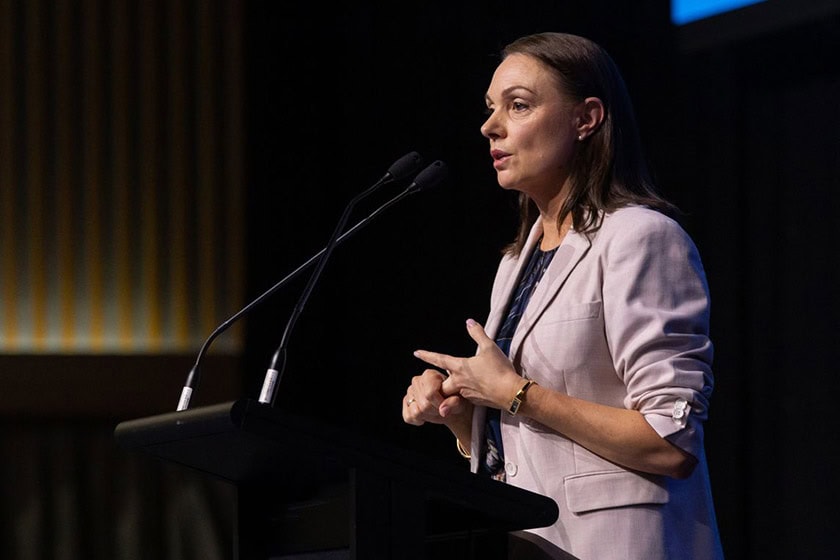
Alexi Boyd, chief executive of COSBOA, said the recommendations will bring a “brighter tomorrow for small businesses”.
“In that brighter tomorrow, small businesses are not the weakest link, but instead are a cyber-savvy bulwark against malicious attacks. In that tomorrow, women no longer need special programs to encourage and help them start their own businesses,” she said.
“The taxation system has been thoroughly transformed to encourage enterprise, and level the playing field with big business. Our sector’s digital capabilities are world class and always improving. The skills of our employees and business owners are continually improving —
whether home grown or through a re-invigorated immigration regime.
“Default least-cost routing has transformed small business cost-bases. Anti-competitive bottlenecks have been swept aside and our industrial relations system simultaneously delivers security for workers and flexibility for small business owners.”