However, business organisations are now also concerned about the inevitable rising cost of insurance premiums and urge all levels of government to look at alternatives before small businesses are priced out of the market.
In Queensland more than $585 million will be jointly funded by the state and federal governments with demand-driven grants of up to $75,000 for primary producers, up to $50,000 for affected small businesses and not-for-profit organisations, and $20,000 for sporting and community clubs and associations.
These grants will be available through the Queensland Rural and Industry Development Authority, call 1800 623 946 or visit http://www.qrida.qld.gov.au.
Nineteen affected councils will also be helped through a $1 million injection each to assist with urgent clean-up works.
This initial funding package in Queensland is in addition to the federally funded $1,000 disaster relief payment and the 13-week income replacement for employees and small businesses.
The payments are being provided through the jointly funded Commonwealth-state Disaster Recovery Funding Arrangements (DRFA) for eligible applicants in the 19 local government areas of Brisbane, Fraser Coast, Gladstone, Gold Coast, Goondiwindi, Gympie, Ipswich, Lockyer Valley, Logan, Moreton Bay, Noosa, North Burnett, Redland, Scenic Rim, Somerset, South Burnett, Southern Downs, Sunshine Coast and Toowoomba.
For more information on grants for primary producers, small businesses and non-profit organisations, phone the Queensland Rural and Industry Development Authority on 1800 623 946 or visit http://www.qrida.qld.gov.au.
In NSW grants for flood-affected primary producers have also been fast-tracked and they can now access $15,000 immediately, through grants of up to $75,000, as part of the jointly funded Commonwealth-state Disaster Recovery Funding Arrangements.
The NSW Minister for Agriculture, Dugald Saunders, acknowledged the magnitude of the weather event and urged impacted farmers to prioritise safety, knowing financial support is available when the water recedes.
Primary producers are encouraged not to self-assess and should consult with their local Rural Financial Counselling Service or apply for the scheme so that the RAA can determine eligibility.
A full list of eligible LGAs can be viewed on the NSW Rural Assistance Authority’s (RAA’s) declared natural disasters launch.
The funding allocations have been welcomed by business associations but they warn it needs to be made available as soon as possible.
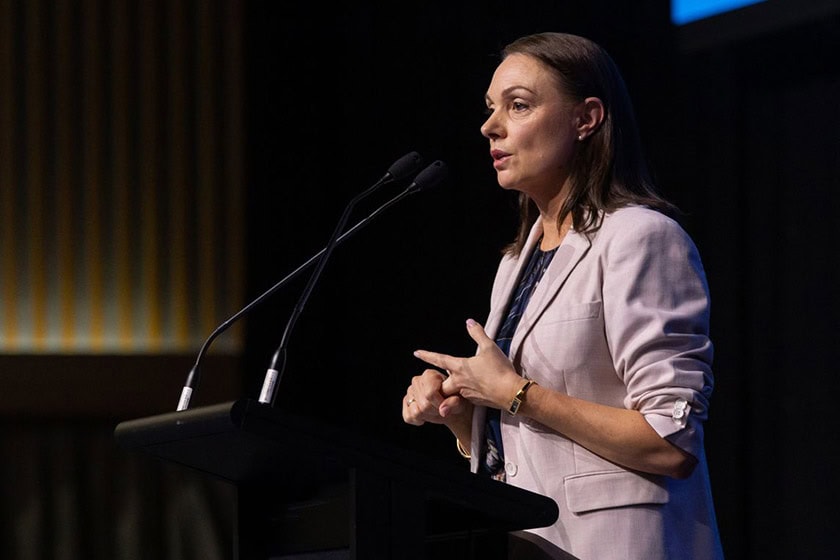
The Council of Small Business Organisations Australia, chief executive, Alexi Boyd, said many small businesses are already weighed down by deferred debt from the impacts of recent disasters.
“We commend the Federal Government for making the disaster payment for individuals in affected LGAs available so quickly. There are small business owners who will be eligible for that payment, and every cent of support counts,” she said.
“We also commend the announcement by the Federal and NSW Governments confirming that grants of up to $50,000 will be available for affected small businesses in NSW. Though business owners can’t apply yet, they can register through Services NSW to be notified when the assistance becomes available, an important step in providing a sense of relief and certainty.
“COSBOA notes that 97 per cent of government money is spent after disasters and just 3 per cent is spent in getting communities prepared. This figure needs to change.
“The Small Business Ombudsman (ASBFEO)’s inquiry into preparedness and resilience is vital and we look forward to seeing the findings.”
Ms Boyd said the insurance market will be greatly affected by the most recent disaster and it now needs to be reviewed as many small businesses will no longer be able to afford the premiums.
“Alternatives to the current insurance market should be explored as a matter of urgency in 2022, one example being discretionary mutual funds (DMFs),” she said.