The Council of Small Business Organisation Australia, the Australian Chamber of Commerce and the Australian Retailers Association have said they will be watching closely how the newly elected Prime Minister faces the challenges facing small and medium businesses in Australia.
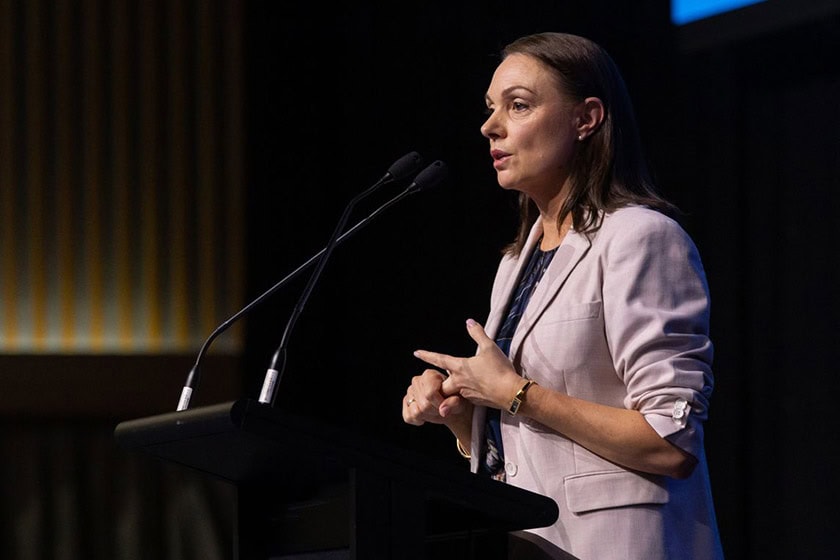
COSBOA chief executive Alexi Boyd said small-business owners will be watching the minimum wage decision with interest.
“We urge the new government to address industrial relations reform, the rising cost of doing business, and the most urgent issue – that of worker shortages – as soon as possible,” she said.
“It is our understanding that small business owners can look forward to lower merchant fees, greater preparedness for natural disasters, greater regulation around late payments, and the continuation of the regulatory reforms introduced in the Coalition’s budget.”
Ms Boyd said small-business owners were also hoping the new government would be working to reduce the burden of compliance and levelling the playing field between big and small businesses.
“There’s lots of work do to in structural reform to give small business owners back the time that COVID stole from them,” she said.
“COSBOA has long warned that small business owners have been feeling fatigued. That sense of fatigue probably extends to the political status quo. After the experience of bushfires, COVID lockdowns, and floods, small business owners – like many Australians – were looking for politicians who promised a better future.”
Australian Chamber of Commerce and Industry CEO Andrew McKellar said one of the issues that most concerns businesses are the shortage of qualified labour across all industry sectors.
He said the first priority of the government must be ending the most acute labour and skill shortages in 48 years.
“Small businesses cannot afford for the next federal government to drag its heels on growing Australia’s workforce,” he said.
The Australian Retailers Association also said labour and skills shortages must be one of the top five priorities of the new government as well as advancing “social and economic outcomes”.
Prior to the election, the Labor Party pledged a broad reworking of the temporary visa system, opening another pathway for migrants to become permanent residents. It also backed the Coalition’s 2022-23 federal budget pledge to provide bonus tax rebates to small businesses investing in tech training, a move warmly welcomed by employers.
While the cost of doing business is surging, one of the other major concerns for business and industry is the rising price of materials and fuel and the ARA has called for further supply chain resilience, to avoid the shocks faced by local retailers battling delays caused by COVID-19 backlogs and natural disasters.
The small-business sector is waiting for more detail on how Labor’s $15 billion National Reconstruction Fund and $1 billion advanced manufacturing scheme will operate, with an eye to how they could bolster Australia’s self-sufficiency.
In regard to tax, Labor promised to ensure multinational corporations pay their fair share of tax to level the playing field for Australian businesses.
However, the small-business community wants other tax cuts more pertinent to them.
A recent report from business finance company ScotPac found that around 17 per cent of businesses with a turnover between $1 million and $5 million listed company tax cuts as an election priority.
The small-business sector is also looking for a simplified BAS reporting and compliance systems, minimising the time business owners spend on administrative duties.