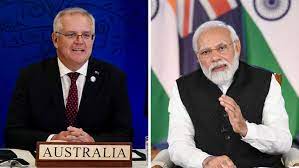
On Friday (1 April), the government announced it had reached the Phase One Agreement of the Australia-India Economic Commercial and Trade Agreement (AI-ECTA).
Australian Chamber of Commerce and Industry chief executive Andrew McKellar said the agreement opens the door to two-way trade between the countries that in 2020 was worth $24.3 billion.
“Business has played an important role in the development of the AI-ECTA and welcomes the opportunities this partnership provides for the comprehensive and substantial exchange of goods and services, including tourism and education,” Mr McKellar said.
“This Agreement is an important and timely development which is consistent with the World Trade Organisation and reinforces the global rules-based trading system.
“ACCI supports the signing of the interim agreement and will continue to work with both the Australian and Indian Governments to complete the full AI-ECTA by the end of 2022.”
As part of the agreement tariffs will be eliminated on more than 85 per cent of Australian goods exports to India (valued at more than $12.6 billion a year), rising to almost 91 per cent (valued at $13.4 billion) over 10 years.
Australian households and businesses will also benefit, with 96 per cent of Indian goods imports entering Australia duty-free on entry into force.
India is the world’s largest democracy and the world’s fastest-growing major economy, with GDP projected to grow at 9 per cent in 2021-22 and 2022-23 and 7.1 per cent in 2023-24.
Benefits of AI ECTA include:
- Sheep meat tariffs of 30 per cent will be eliminated on entry into force, providing a boost for Australian exports that already command nearly 20 per cent of India’s market.
- Wool will have the current 2.5 per cent tariffs eliminated on entry into force, supporting Australia’s second-largest market for wool products.
- Tariffs on wine with a minimum import price of US$5 per bottle will be reduced from 150 per cent to 100 per cent on entry into force and subsequently to 50 per cent over 10 years (based on Indian wholesale price index for wine).
- Tariffs on wine bottles with minimum import price of US$15 will be reduced from 150 per cent to 75 per cent on entry into force and subsequently to 25 per cent over 10 years (based on Indian wholesale price index for wine).
- Tariffs up to 30 per cent on avocados, onions, broad, kidney and adzuki beans, cherries, shelled pistachios, macadamias, cashews in shell, blueberries, raspberries, blackberries, and currants will be eliminated over seven years.
- Tariffs on almonds, lentils, oranges, mandarins, pears, apricots and strawberries will be reduced, improving opportunities for Australia’s horticulture industry to supply India’s growing food demand.
- The resources sector will benefit from the elimination of tariffs on entry into force for coal, alumina, metallic ores, including manganese, copper and nickel; and critical minerals including titanium and zirconium.
- LNG tariffs will be bound at zero per cent at entry into force.
- Tariffs on pharmaceutical products and certain medical devices will be eliminated over five and seven years.