
At a glance
- Global anti-money laundering efforts lack evidence of impact against illicit financial flows.
- Compliance costs are huge, but only a tiny fraction of laundered money is seized.
- Australian accountants face new AML compliance obligations from mid-2026.
For more than three decades now, authorities around the world have been toughening global anti-money laundering (AML) efforts. They have been trying to curb illicit financial flows, often stemming from drug trafficking.
But the evidence of AML’s success continues to be very limited. Indeed, the thinness of that evidence would likely surprise most of the people trying to comply with AML rules.
The money-laundering problem is real
We don’t know for sure how much business global money-launderers do each year. The most widely quoted estimate was put forward by the IMF back in 1998, and is still endorsed by the United Nations Office on Drugs and Crime (UNODC). That estimate is that 2% to 5% of global GDP is laundered each year – meaning, in 2025, US$800 billion to US$2 trillion.
Meanwhile, the cost of financial crime compliance for financial institutions may exceed US$200 billion annually, based on findings from Forrester Consulting.
From mid-2026, nearly every Australian accounting firm will have new obligations to help chase money launderers. So it’s worth looking at how the global fight against money-laundering is going.
Little evidence of impact
All of the experts quoted in this article say they would like to see money laundering wiped out.
The indirect evidence is not reassuring, though. Money-launderers appear to be plying their trade with much more success than most other criminals. According to a 2021 UNODC report, just 0.1% of illicit financial transactions are ultimately seized or frozen. In the United States, research suggests money-launderers face less than a 5% risk of conviction. Europol notes that “confiscation of criminal proceeds remains at an alarmingly modest level of approximately 2%”.
At the Institute of Public Accountants, general manager of advocacy and emerging policy Michael Davison concurs. The “intent is good” with AML rules, he says. “[But] looking at the research around the world, the suggestion is that there has been little impact … The empirical data is just not there.”

Kathryn Westmore leads the financial crime policy program at the Centre for Finance and Security at the Royal United Services Institute (RUSI) in London. She worries that given the AML regulatory response started 35 years ago, we should now be able to see its impact. “Certainly, it doesn’t appear to be substantially more difficult for criminals to launder their illicit proceeds than it did before we introduced these regulations,” she says.
Westmore adds that while “effectiveness is the holy grail of the AML system”, for now it is a goal that regulators “seem unlikely” to achieve.
And Luke Raven, an Australian fraud expert at Raven AML, adds that over-reliance on compliance alone is unlikely to deliver strong crime-reduction outcomes. “Compliance doesn’t get you there,” he says. “You can be fully technically compliant with AML regulation and still be very bad at finding financial crime.”
Among AML analysts, views like those of Davison, Westmore and Raven represent the mainstream thinking about AML’s effectiveness. We have evidence that technical AML compliance has improved. But we have little to show that the global campaign against money-laundering is substantially cutting the level of financial crime.
The measurement challenge
The IPA’s Davison says the big problem with measuring AML’s effectiveness is that “money-launderers don’t answer the phone when statistical agencies try to measure the size of their business.”
Even the Australian Attorney-General’s department sees problems with proving current AML regulation’s effectiveness. Last August, the department assessed the likely impact on crime from the latest round of AML regulation. It said explicitly that its conclusions were limited by a lack of evidence.
AML experts have been pointing out such problems for decades now. Some have even suggested that in this case, absence of evidence for AML’s effectiveness might be evidence that it doesn’t work. Financial crime expert Dr Ronald Pol has been among the most critical: after looking at the state of the data, he nominated AML as “the world’s least effective policy experiment”. Pol has also suggested compliance costs could be “more than 100 times” higher than the amount of laundered money seized. Similarly, US expert Raymond Baker has estimated that AML enforcement fails 99.9% of the time. Baker has famously simplified those findings to a blunt claim: “Total failure is just a decimal point away.”
Honourable intent
Despite the thin evidence bases, governments globally have steadily expanded AML obligations, reaching more activities and upping their due-diligence expectations.
Australia is preparing for a second tranche of reforms to the Anti-Money Laundering and Counter-Terrorism Financing (AML/CTF) Act 2006. New compliance obligations set to start from 1 July 2026 will bring accountants and other professionals into the net.
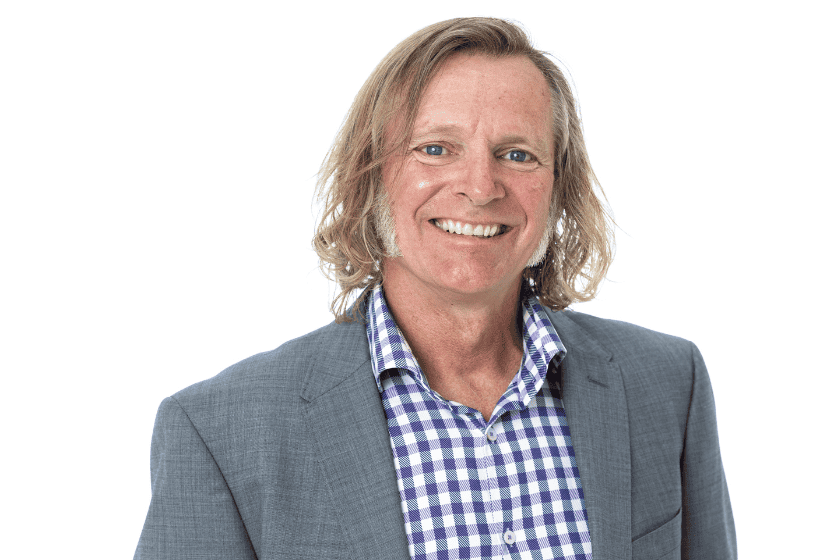
Davison warns that IPA members and other accountants will see the latest reforms as “another compliance burden”. But he says that “accountants need to recognise that what’s coming in July next year is for the greater good and that they’re doing their part for the community.”
The question in the minds of many experts is this: as AML rules grow, will we be able to find more evidence that AML rules are substantially cutting into financial crime?
Why the system fails
Concern about AML rules’ effectivenesss typically focus on three main topics:
- Transaction complexity – criminals move money through offshore accounts, cryptocurrencies and shell companies, making it difficult for financial institutions to trace.
- Compliance overreach – regulators often measure success by the number of suspicious activity reports (SARs), not prosecutions (for example, in 2022, American financial institutions filed more than 3.6 million SARs, but only a fraction led to investigations or convictions).
- Weak international cooperation – while money laundering is a cross-border problem, international collaboration remains fragmented.
Tim Pinkney is director of professional standards at the Institute of Financial Accountants, the IPA’s UK sister body. He has worked in the money-laundering regulation space since 2007, when the UK’s current regulations came into force. Pinkney notes that “the problems that occurred with the effectiveness of that regime are still by and large the same as they were when it was first implemented.”
A regulator’s view
In Australia, the second tranche of AML reforms is designed to bring the country into line with the Financial Action Task Force’s global standards. The reforms also expand investigative and enforcement powers for AML regulator AUSTRAC.
AUSTRAC CEO Brendan Thomas says criminals constantly seek new ways to exploit legitimate businesses. “Where there is criminal activity, there is money-laundering,” he says. “Our job is to harden the financial system against criminals seeking to profit from their crimes. That’s why we are expanding the AML/CTF regime.”
“Looking at the research around the world, the suggestion is that there has been little impact … The empirical data is just not there.”
Michael Davison, general manager, advocacy & emerging policy, IPA
Thomas concedes that the new regulations will not eliminate money laundering, but argues they “will make it much harder”. Since 2020, he says, the Australian Federal Police has “restrained” more than A$1.2 billion in criminal assets – that is, legally frozen or restricted the use, transfer or disposal of such assets. That total includes more than A$790 million in residential and commercial real estate properties. “This shows just how much of an impact we are having on the ability of criminals to commit crimes and prosper,” Thomas says.
Having a measurable impact on the crime behind money-laundering is a tall order, though. Twenty years ago, in an early study of anti-money laundering regimes called Chasing Dirty Money, authors Peter Reuter and Edwin Truman set out the scale of the challenge. “High-level drug dealers, the only ones who need money laundering services, account for no more than 25 percent of the retail price of cocaine and heroin,” they wrote. “Raising the cost of money laundering from, say, 5 percent to 10 percent, a massive achievement, would raise the retail price of the drugs by only about 1.25 percent. That is not to say the AML controls are not worth having, but their accomplishments are likely to be very difficult to detect.
Raven says current AML regulation often centres on those “who are trying to do the right thing” and relies on a “compliance mindset”. “We’ve become focused on compliance. It’s a substantial burden and discharging that burden becomes more of a focus than actually fighting crime.”
Paying the compliance cost
While evidence of AML rules’ impact remains in short suppply, compliance measures remain tough. Financial institutions around the world are being penalised for AML breaches, with total fines for AML and “know your customer” failures hitting US$6.6 billion in 2023.
Pinkney notes that joining the battle against money-laundering has been a drain on accountants’ resources, especially given that more than 70% of IFA members are sole practitioners with limited resources to address AML compliance in the first place. “They’re all grouped together with the likes of KPMG who have huge compliance teams,” he says. “So it’s a constant challenge.”
In Australia, Thomas says AUSTRAC is working to prepare new sectors for the pending AML/CTF changes. “We want to make compliance easy to understand and easy to achieve,” he says. “What we won’t tolerate is wilful non-compliance – we expect that all regulated entities take their obligations seriously.”
Many of those outside the regulatory machinery would like to see more than just compliance. Westmore advocates a shift to AML “effectiveness, rather than technical compliance” if failing regulatory efforts are to be turned around. “Compliance costs are in the billions of dollars and increasing every year,” she says. “And a lot of time is spent on low-value activity.”