
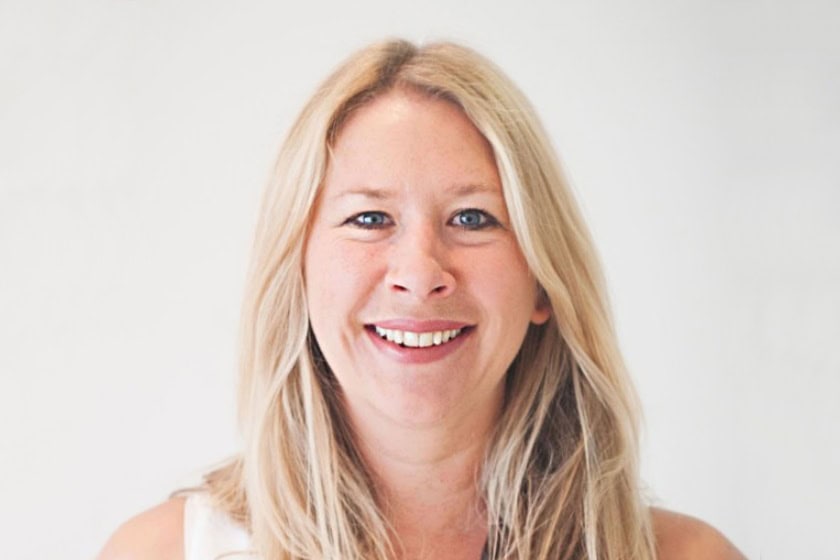
Passion is Katy Barfield’s raison d’être. It is what drives her to create and build a business that is not only breaking new ground but is helping to solve one of the world’s biggest problems. Barfield is the founder and CEO at Yume Food Australia, a world-first start-up that is tackling the issue of manufacturing food waste.
Yume operates as a social enterprise (a for-profit, for-purpose business model) and is grounded in the belief that all food is valuable. It works by automating clearance sales of excess and ageing food, connecting manufacturers with a diverse buyer network.
The problem it addresses is huge. Food waste costs the Australian economy around $36.6 billion each year and we waste around 7.6 million tonnes of it — the equivalent to one in five bags of groceries we buy. The commercial food sector is responsible for 3.2 million tonnes of that, or 400 semi-trailers full of food every day.
In environmental terms, food waste adds up to three per cent of Australia’s annual greenhouse gas emissions and 2600 gigalitres of water — five Sydney Harbours — a year, according to the Department of Climate Change, Energy, Environment and Water.
The figures are mind-boggling, but they weren’t something Barfield was even aware of when she first migrated to Australia in 2001.
She’d completed a Masters in Drama, had performed on stage, and even acted in BBC drama The Bill before putting on a backpack after the 9/11 terrorism attack in the US to explore the world.
“I first became aware of the food element of waste when I owned a little bar on Little Bourke Street in Melbourne, about 17 years ago,” she said.
“It was a dive when my partner and I bought it — warm beer, cold chips — but we turned it into a little jazz bar. At the end of service each Friday, the chef would take all the food from the fridge and put it straight into the bin.
“I was shocked. We were only a little bar in Melbourne, and I realised there were thousands of places like ours across Australia doing the same thing. That was mind-blowing. That was the first time I found a social conscience around the food element of things.”
But it wasn’t the first time Katy had found her social conscience.
She’d previously been fundamental in establishing a funded street clinic in Afghanistan for the charity Children in Crisis, a non-profit organisation aimed at improving the lives of children and women from underprivileged backgrounds in third-world countries founded by the Duchess of York, Sarah Ferguson.
“I’ve had a social bent since I was a child. My parents would talk about how I’d go rescue a robin from the cat’s mouth and nurse it back to health,” she said.
“I’d gone into volunteering while acting and really felt drawn to creating change and making a difference. I worked for Children in Crisis as a volunteer and managed to secure funding for the street clinic in Kabul in Afghanistan.”
Before coming to Australia, she’d also experienced the other side of the business divide, working as a marketing director for a large hospitality company.
“I love forecasts and playing with numbers,” she said.
“Every job I’ve had I’ve been responsible for forecasting, modelling, and delivering.”
It was that skill set that attracted the attention of Ian Carson, chairman of markets at PricewaterhouseCoopers (PwC), founder of the consulting firm PPB, and the man behind the not-for-profit SecondBite.
SecondBite began in 2005 when a group of friends would visit the market stalls in Melbourne at the end of a day, collect surplus food, and drop it to a local charity that ran a food program.
“I met Ian in 2005–2006, and he had this idea for SecondBite which piqued my interest,” she said.
“They were looking for someone to pull it altogether and that was when my food waste journey really began.”
It was through Barfield’s big-picture thinking that the small charity secured the support of Coles in 2011. The rest, as they say, is history.
In 2011, Coles and SecondBite formed a national partnership, which led to a rapid expansion of the organisation’s operational scale and reach. It was Barfield’s job to find a way to get corporate support for the charity, and she knew that the supermarket chain would be the perfect partner.
“It’s all about researching the person you’re going to deliver the message to,” she said. “I knew that I wanted Coles to support us financially, give us access to the fresh food waste they had, and help us move it. At the time, Coles had 700 stores Australia-wide, and SecondBite had about 20 people. I knew I had to try and mobilise an army.
“I went to all these other organisations that had thousands of volunteers and asked them if they would partner with us to distribute food from Coles stores to local charities. I had to find a way to get that locked and loaded before I approached Coles to convince them it was not going to cost them any money to partner with us.
“I then researched the amount of green waste Coles had each year and how much they were paying to get rid of it. I had to get the complete costings from each state because they were all different, and then come up with a business case, that we could manage that green waste for them, and they would get all the ancillary benefits.
“I also found out that the head of Coles at that time, Stuart Machin, hated PowerPoints. I got someone to create a moving image for me and set it to music and it just so happened that the song I chose was Stuart’s favourite. He said yes at that meeting — apparently a pretty rare thing for him to do.”
Barfield remained as SecondBite CEO from 2006–2012, and in that time the organisation went from collecting around 600 kilograms of fresh produce in 2006 to redistributing more than 2 million kilograms in 2012 to more than 400 community food programs across Australia.
After leaving SecondBite in 2012, Katy founded Spade & Barrow in an effort to help struggling farmers sell produce that didn’t meet the exacting specifications of the big supermarkets. It was snapped up by Aussie Farmers Direct in late 2013.
In 2016, she had another vision — to create a social enterprise that would not only achieve a reduction in food waste and support the more socially disadvantaged in society, but also be a profitable business that could support itself without the need for funding or grants.
“I deliberately wanted to do Yume as a for-profit, for-purpose enterprise,” she said.
“I couldn’t pull on grants or any money from people wanting to donate because I didn’t want to be set up as a not-for-profit and to spend 70 per cent of my working day fundraising. I wanted to create a sustainable business model.
“For Yume, the vision was a world without food waste. That was the goal — that no good food should go to waste because there are solutions above landfills. When I started with SecondBite, the food rescue landscape was very different. It was all about emergency food relief, there wasn’t much fresh food being moved, and I saw that gap in the market.
“It doesn’t matter if an enterprise is for-profit or not-for-profit, you need to identify that gap and you need to do something different if you’re going to take people on that journey with you. You have to be able to show people the ‘why’ of it.”
“People did rally behind the idea — getting fresh, nutritious food to people who are doing it tough to give them a better chance of getting that leg up. Getting people nutritionally dense food was what motivated people to support us in SecondBite, and that is how we got Coles on board.
“But SecondBite was a not-for-profit and I wanted Yume to be an accredited social enterprise — for-profit, for-purpose — which is much harder to get up and running.”
Yume prevents edible food from going to waste by using technology to connect businesses that have surplus food products — such as Unilever and Mars Food — with other businesses that can purchase it at a discount, such as large caterers like Sodexo, which services mines. If food isn’t sold, it’s offered to a charity of the manufacturer’s choice, giving it every chance possible to end up on someone’s plate.
The social enterprise was started with $500,000 from investors and Barfield’s own mortgage, and it was her reputation as a forward-thinking and innovative entrepreneur which helped her secure backing.
In its early days, Yume began as a consumer app where, for example, a restaurant could sell its leftover lasagne to the public.
But it soon became clear to Barfield that “these were really small amounts financially that were going to not be the financial engine room of our business”. She also felt the impact on preventing food waste could be vastly increased.
With the help of other investors, the business pivoted to become a B2B platform that charges a modest subscription to suppliers to utilise the technology. “It’s been hard graft since then, but we’ve stuck around and delivered on our promise,” she said.
“Yume is unique globally; we’ve gone upstream to the manufacturers and plugged all the leaks in their end-to-end clearance process. It may only amount to one to two per cent of their overall production costs, and it’s non-core, meaning it doesn’t warrant a lot of work or investment from their end, so we’ve solved that problem for them.
“The technology we have developed is very dynamic, and what I hope to see is that more manufacturers jump onboard. Big names like Unilever, Mars Food, General Mills, and other manufacturers are using Yume technology, but we’d like to see the top 100 Fast Moving Consumer Goods manufacturers rewriting how they do clearance with us too.
“Yume has only been able to make an impact on the food industry by listening to the industry’s needs and collaborating to create technology that is actually of value. One of the reasons food waste occurs is because of inefficient processes along the supply chain. By listening to Yume users, we’ve been able to find solutions to these problems.”
Barfield said one of her other great passions is the creation of a circular economy and she believes the days of corporate giants on huge salaries giving donations to not-for-profits are numbered.
“We want to attract those people into social enterprises — to do good for the planet and create a profitable business is a viable way to solve some of the monumental problems the world is facing.
Yume has also started to facilitate repurposing projects — for example, the creation of a beer brewed by Lion with upcycled cereal byproducts from Kellogg’s. Barfield is the first to admit the road for Yume has been filled with twists, turns, and many forks. An aspiring actor decades ago, she would never have imagined she would be now running one of the most innovative social enterprises not just in Australia, but globally.
“I was told I was pretty good actress, but my heart is here and my passion lies in what I am doing now,” she said.
“This is important. We have to change the way we treat our resources. They are not infinite, and we need to treat them with respect they deserve. Food waste is one of the biggest levers we can pull to combat this.
“I remember coming out of that Coles meeting and saying that I now have to get on to the next thing. Elana Rubin (director of Telstra and Slater & Gordon) was with me, and she told me to take a moment and look at what I had done.
“She is an incredible woman and such a mentor to me. She said to me ‘just stop and give yourself five minutes to think about what you have just done — that’s just as important as the next mountain you want to scale’. I believe to do anything at this level you have to be disciplined, but I also believe if you’re passionate about something, success will follow you.
“I’ve been on the food waste reduction journey for 17 years, and it’s been about discipline and focus. But I’m passionate about it, or I wouldn’t have stayed the course.”















