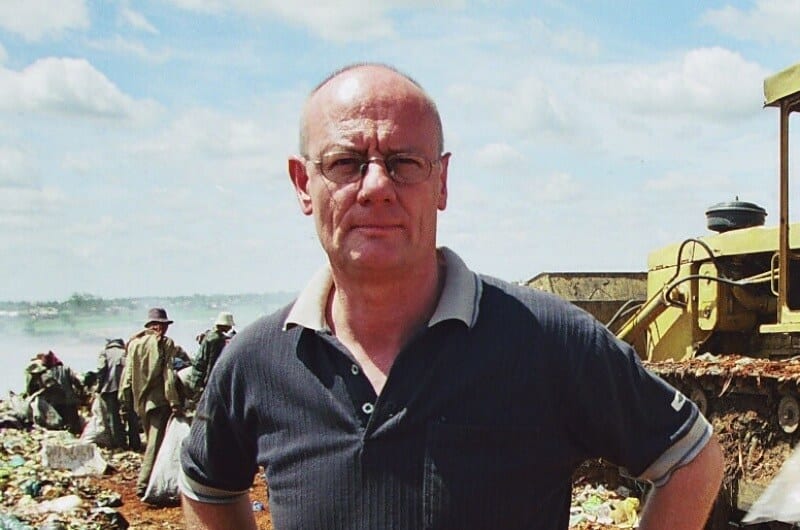
He doesn’t look or act like your typical CEO. And by his own admission – or perhaps it’s a boast – Tim Costello is conspicuously lacking in the formal credentials you’d expect of a man who runs a $350 million-a-year enterprise.
Ten years ago, when he was headhunted to take over as Australian chief executive of global charity juggernaut World Vision, Costello had no degree in business management or accounting and very little experience in running anything.
Sure, he had been mayor of Melbourne’s colourful bayside suburb of St Kilda and an outspoken advocate for the disadvantaged – a regular ‘media tart’ to some. And as an extension of his day job as a Baptist minister, he had helped to set up and run Urban Seed, a Christian charity dedicated to tackling homelessness and drug abuse in the city centre.
But by conventional measures, he seemed well short of the expertise needed to run World Vision, whose established name and child sponsorship pitch have helped it dominate Australian overseas aid fundraising.
“I was an unusual choice at the time,” Costello concedes, with apparent satisfaction. “I certainly wasn’t chosen because I was a ‘you beaut’ manager. There is no doubt that in this day and age, I’m an unusual CEO. You look at private companies of that size, the CEOs are very hands on, very MBA-literate; they love devouring management books … But good CEOs build teams; I think I’m good at building a team.”
Steep learning curve
Team building aside, what particularly attracted the World Vision board to Costello was the power of his personality – his potential to give the organisation a higher profile and a voice.
“Back then, the board felt World Vision was well organised and well run, but it lacked the voice to match its size,” he says.
Costello’s inexperience in running things ensured a difficult first few years in the job. One of his first initiatives was to pack himself off to Harvard for a three-week management course. He also buried himself in books about management, lots of them.
“I was on a learning curve steeper than climbing Mt Everest,” he says. “I learned about balance sheets, for example. It was sort of nuts and bolts, hands-on stuff. [But] in the end I gave up reading them, because they all seemed to say the same thing.”
Team with a difference
Costello is talking to Public Accountant in his suitably austere office at World Vision headquarters in Melbourne’s Burwood East – a middle-class suburban sanctuary that presents a surreal contrast to the desperately impoverished and otherwise stricken corners of the world to which he frequently travels for his job.
Sometimes he wears suits, but it’s not unusual for staff to see their CEO in the more casual attire of open-neck shirt and jacket.
Just back from lunch in the World Vision canteen (another indication of his unpretentious style), his manner is jovial, welcoming and engaging, which is not only endearing to strangers but has propelled him a long way in his career as perhaps Australia’s best-known advocate for, and supporter of, the disadvantaged and displaced.
No doubt Costello has also used his personality to great advantage in wooing and surrounding himself with a team of administrators at World Vision, who, he says, compensate for his own shortcomings and help him sustain and expand the organisation’s position in the Australian development charity sector.
He certainly didn’t attract his key people with bulging remuneration packages. One of the big differences that he observes between running a not-for-profit organisation and a conventional business is that his employees tend not to be motivated by money. This puts Costello in the fascinating position of being able to lure key staff to his organisations by offering them a cut in salary.
“Many people who’ve come here have taken a significant pay cut,” he says. “I rarely have people here asking for pay rises. They’re not motivated by bonuses – and they don’t get them either. They’re here to make a difference.”
Christian values
Another striking feature of his 600-strong Australian workforce is the high proportion of active Christians among them.
World Vision International was set up in 1950 as a Christian aid, development and advocacy organisation, and to this day – despite the increasingly secular profile of many of the developed countries from which it operates – its philosophical underpinnings remain firmly Christian.
“I’m here because of my Christian faith,” says Costello. “And a lot of people here – maybe 65 per cent – are motivated by their Christianity. They may not all be churchgoers, but that would be their motivation.”
Costello points to the website of the Australian branch of World Vision, detailing the theological foundations of the organisation’s commitment to accountability.
On ‘accountability to the poor’, for example, the website document declares: “World Vision must remain vigilant in its mission to children in poor communities for that is the godly calling from which the organisation was born.”
On accountability to its donors, it says: “Christians should be beyond reproach in their financial dealings… God expects, and Scripture applauds, the highest standard of probity in dealing with donated resources.”
Costello confirms that he believes World Vision would apply higher standards of probity to its staff than a comparable private sector organisation. “I would say it’s probably more diligent,” he says. “The thing you get sacked for here is any blurring of the lines on finances or probity. Our only leverage is our brand and reputation. Any financial mismanagement or question marks, it just savages the brand.”
Costello concedes his job can be gruelling, but he loves it and has no immediate plans to move on. “The travel knocks you about. I’m away about three months every year, a trip every six weeks. And I’m not going to Paris; I’m going to Harare and Addis Ababa. And then you drive for hours into the bush on African roads with potholes big enough to swallow trucks. It’s very demanding.”
And it’s certainly not the life of your typical CEO.