At a glance
- Mandatory sustainability reporting is now being phased in for Australian entities.
- Even small businesses will be affected through their supply chains.
- Sustainability will become a core, value-adding skill for all accountants.
Just a few years ago, sustainability seemed a long way away from the business of accounting. Now the two fields are colliding: We want the ability to quantify and assess our sustainability reporting.
Those in the small to medium business space are now feeling the effects of that desire.
Mandatory sustainability reporting has already arrived in Australia. As of January 2025, entities must prepare a sustainability report if they possess two of these three characteristics:
- consolidated revenue $500 million or more;
- consolidated gross assets $1 billion or more;
- 500 employees or more.
Other entity groups are being phased in over the next two years.
The rules won’t apply to entities with less than $50 million in annual revenue, $25 million in assets or less than 100 employees. But it’s increasingly apparent that much of a corporation’s environmental impact happens in the supply chain beyond its own boundaries. So companies that compile the reports will also be asking their suppliers for sustainability data.
That means even small organisations may be affected by this new regulation.
Accountants will build this “fourth report”
ASIC states that a sustainability report “must contain climate-related financial information required under the Corporations Act and AASB S2 Climate-related disclosures. It is the fourth report required as part of these entities’ annual reporting obligations, alongside the financial report, directors’ report and auditor’s report.”
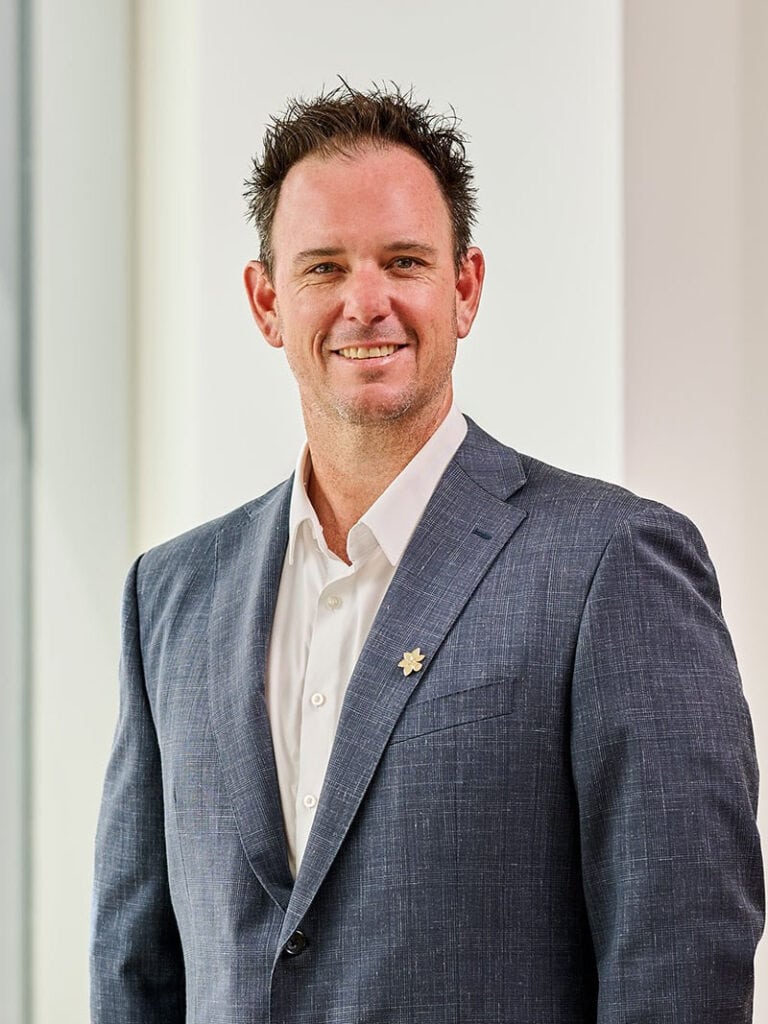
“This is very similar to financial reporting in terms of the requirements, expectations and even the process,” says Jim Allenby, Managing Director of PKF Parvate Sustainability. “I think that certainty is going to give accountants a lot more permission to feel like they are the people in charge of this reporting.”
At the same time, demands on accountants seem greater than ever. Sustainability reporting will add to that pressure. Fortunately, along with new responsibilities come technological solutions that can simplify the process, enabling accountants to do more with less.
Data collection needn’t be daunting
If accountants are daunted by the concept of data collection for sustainability reporting, it’s important for them to know that technological solutions are emerging to help with that task, says Ashley Bleeker, acting GM Strategy and Impact at Australian Unity.
“There is a myriad of carbon accounting tools out there at the moment,” Bleeker says. “There are hundreds you could choose from. Some … carry an enterprise price tag. There are others produced by startups that have been built by former accountants, that are designed to be a true accounting platform for carbon accounting and are fully auditable.”
“Accountants learning sustainability is always going to be more valuable than sustainability people learning accounting.”
Jim Allenby, Managing Director, PKF Parvate Sustainability
ESG reporting platforms currently available to Australian accountants include:
- Sumday: A good choice for SMEs and Xero users, potentially free through the current Xero partnership.
- Trace: Budget-friendly Australian provider, good for SMEs and designed for the new reporting standards.
- Avarni: Designed to integrate with complex organisations handling large and varied data sets.
- IBM: For firms at the larger end of town, Envizi now has the Australian Sustainability Reporting Standards embedded as a managed framework.
Allenby agrees there are numerous good choices available already, most of which are fast evolving.
“Even if they’re not perfect right now, they’re getting better,” he says. “So I don’t think technically there’s going to be a huge amount of challenges. It’s instead going to be a mindset and time issue.”
Data is power
The presence of a collated data set that has come from the right sources and is easily accessible within a technology platform offers great power to its user, Bleeker says.

Once an accountant has the ability to collect detailed data on electricity and gas consumption, for example, finance teams become very interested in what is now possible.
“Because we now measure emissions, and because emissions can be a proxy for money spent on utilities, I can now tell the CFO that we spend a lot on gas and electricity at our aged care facilities,” Bleeker says, referring to his current role.
This data enables him to then report accurately on the savings – in both dollars and carbon emissions – that might flow if Australian Unity installs solar on an appropriate roof.
“Our internal approvals are based on internal rates of return and payback periods, as well as the environmental benefit that comes with it,” Bleeker says. “This data gives you the ability to have a conversation that doesn’t have to just be about sustainability, or the environment, or emissions.”
When choosing a data platform, Bleeker says, look for a system that offers:
- ease of accessing relevant data;
- ability to withstand assurance and audit;
- an engaging and easily accessible learning and development function; and
- transparency around where it draws data from and how it treats that data.
The future is sustainable
Sustainability reporting has the potential to supercharge the purpose of those in the accounting and finance space.
What will change? First, there will be fewer ESG/sustainability accountants and more accountants who simply understand sustainability, says Allenby. That’s good for everybody, he says. “Accountants learning sustainability is always going to be more valuable than sustainability people learning accounting.”
Bleeker notes that sustainability reporting gives accountants yet another opportunity to prove their value across businesses and brands.
“The thing that accountants probably aren’t giving themselves enough credit for is being very good at communicating performance to various stakeholders in a way that’s meaningful, transparent, transferable, accurate, consistent.”
Sustainability reporting will give greater opportunity to do just that.
“That is a skill in and of itself,” Bleeker says. “The principles for sustainability reporting are exactly the same as the principles that underpin sensible, effective and comprehensive financial reporting.”
Give yourself a solid foundation with IPA’s Introduction to Sustainability Reporting CPD webinar.