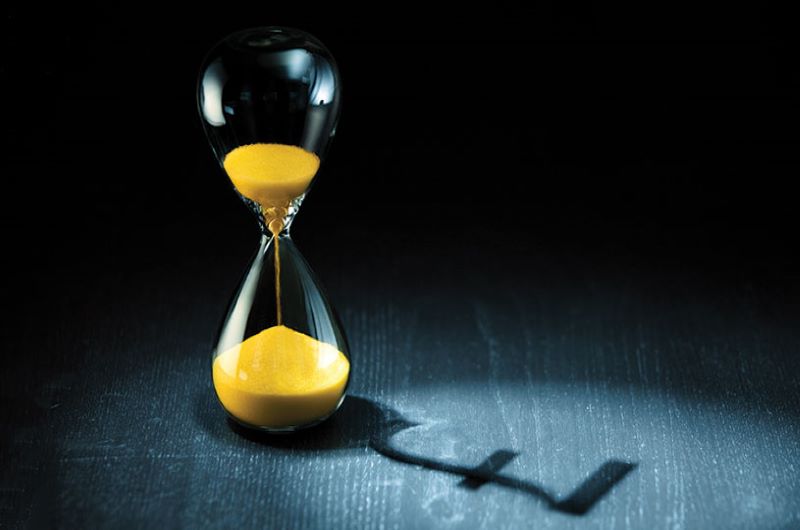
It’s now not just a matter of if the country will slide into a recession, but more importantly what kind of recession Australia is facing in 2023.
In October last year, the International Monetary Fund predicted that a third of the world’s economies would be facing some kind of recession this year.
Katrina Ell, an economist at Moody’s Analytics in Sydney, told the BBC in an interview in January that while “our baseline avoids a global recession over the next year, odds of one are uncomfortably high”.
“Europe, however, will not escape recession and the US is teetering on the verge,” she said.
While pundits predict what they’re describing as ‘soft landing’ in some countries, Australia’s experience will depend on how fast the Reserve Bank of Australia can pull the inflation figures back into range according to Judo Bank economist Warren Hogan.
“I think the issue is not so much if Australia will fall into recession, it is the type of recession that is the critical point,” he said.
“We have had an extraordinary period with the pandemic and a strong recovery of the economy which has bought with it inflation, so I’m not sure if we will escape a technical recession.”
Mr Hogan said if unemployment doesn’t surge Australia could come out with that ‘soft landing’ but the pressure on the business community will still be apparent, especially for those businesses which he says “don’t have a long-term future”.
“They may not make it but given what we have seen in the economy that is not a bad outcome,” he said.
“If we can get inflation under control and interest rates under control, we will have done all right.
“What we really do not want to see is a bad recession similar to the US in 2008 or what we saw in the 1990s and that is something we can’t dismiss because it will come about if we don’t take the inflation rate seriously enough.
“If the RBA is influenced to not raise rates enough they may find the economy will get away from them and if inflation rises at a high level that means rates will go up a lot.
“If rates go up to 5-6% as they did in 2024 that is when you will see the bad recession and that will mean a significant dislocation in the financial system – banks won’t be able to provide finance, unemployment goes up three or four per cent and businesses with a long term future will be caught up in it.”
He argues that Australia shouldn’t be afraid of slowing the economy now because if it is successful in taking inflation down it will avoid that harder recession down the track.
“If it is the price we pay after the pandemic then so be it. We have the lowest unemployment we’ve had for a couple of generations and we need to secure that as the new normal for Australia,” he said.
“If we can do that we may come through the middle of the decade in good shape.”
However, for many small businesses, the reality is that they are already facing recession-type conditions said Amanda Rose, founder and CEO of Small Business Women Australia.
“I believe we have been in one [recession] for a long time. Just like boiling the frog, small business owners have been slowly suffering since before Covid and it has just been getting worse each year,” she said.
Ms Rose said she has been seeing the signs of a recession for some time especially in the increase in costs from all sides.
“Small business women are facing the increase in supply costs, lease increases, interest rate hikes whilst at the same time having to face high taxes, increases in super, increase in wages and now they must find funds for pay for 10 days Domestic Violence leave (without government assistance to do so),” she said.
“Bricks and mortar businesses are suffering because they have a bigger burden to carry with energy costs and rental costs increasing. What most governments don’t understand is that the small business owner gets hit from all sides with no relief.
“There are no bailouts for small business owners when they are struggling (unlike the larger companies). These pain points are set to worsen which will result in even more businesses (such as local retail and hospitality) going under and considering women-led businesses hire women – this will result in a jump in unemployment for women which impacts their financial independence.”
Strategies to minimise the impact of even more economic heartache and slowdown are essential if small businesses are to survive, she said.
She said a good accountant can go a long way in helping small businesses to regularly look at profit margins and cash flow.
“We also strongly recommend reading legislation, meeting with lawyers and staying on top of what is happening because small business owners are often busy working in the business, they may not be aware of what is being decided on by politicians that can have a huge impact on their future,” she said.
“One must always be prepared for the worst-case scenario (which is different for each business owner). We always advise speaking with your accountant and even a lawyer or other specialists that can help you map out options based on different scenarios.
“I believe we are going to see small business owners (in particular women) close up shop and return to the workforce for secure and regular income. Retail and hospitality businesses will rely on their local communities to keep doors open.
“It is also an opportunity for businesses who haven’t considered the future to look at what they can change and prepare to be marketable and competitive, for example leveraging online, AI and partnerships with larger companies.”
But it’s not all doom and gloom according to Institute of Public Accountants member and CEO of Sky Accountants, Jamie Johns.
He believes that Australia will most likely avoid a recession mainly due to house prices and childcare.
“Our employment rate has recovered, and we are still seeing lots of money in the economy,” he said.
“Most tradies are booked out for nine to 12 months and they are like the canary in the cave.
“Australians have $260 billion extra in their bank accounts, as compared to prior to the pandemic.”
But he does admit with the cost-of-living crisis and energy and supply chain challenges coupled with inflation it is difficult for businesses and individuals to plan for the future particularly if their own income has not gone up.
He said his advice to his clients is to be frugal.
“Budget household spending and increase prices for businesses so you don’t lose profits,” he said.
“Get an extra job if you can or have both parents working. For small businesses, the biggest factor is being aware of profits and making sure they don’t drop. You have to measure the right things.
“But I believe the future is extremely bright. Technology is developing at a rapid rate. Humans will be on Mars by 2030 and quantum computing will increase productivity.
The pandemic pushed forward the adoption of technology by five years. A lot more people are working from home. Also, it’s an important point to understand the economic cycle or investment clock. If you know where we are on the clock, a small business can plan for the future.
“The old sayings like ‘make hay while the sun shines’ and ‘save your nuts for winter’ still apply to financial and business management.”