Image: AAP Image/Lukas Coch
IPA’s 28th Budget Review was held online on 26 March.
- Assistant Minister for Competition, Charities, Treasury and Employment Dr Andrew Leigh said the budget balanced cost-of-living pressures with measures to lift Australia’s productivity.
- Australian Chamber of Commerce and Industry CEO Andrew McKellar, who is also on the board of the Australian Made Campaign, welcomed the $20 million to promote Australian made goods, but urged for a reduction in overall Government spending.
- Assistant Treasurer and Shadow Minister for Financial Services Luke Howarth said the budget was “for the next five weeks leading to an election, not the next five years”. He accused the Government of profligacy as standards of living plummet.
- Senator David Pocock said while there were some good initiatives around health, there was “very little for small business” and “some serious doubts” about the future of the small business instant asset write-off measure.
- See IPA’s budget media releases here and here.
In a budget that delivered $36 billion in new spending before an expected election announcement, small business owners received a mixed bag of temporary relief, policy uncertainty and missed opportunities for wholesale structural reform.
Host and broadcaster Emma Alberici labelled the $17 billion in tax cuts that start at $5 a week from July 2026 “an extremely predictable headline for a nervous Government about to call a general election”.
“Every Australian gets a tax cut, and every Australian business will receive energy bill relief in this budget,” she said. “Nothing at all wrong with any of that. Essentially, it’s accounting for a bit of bracket creep.”
On the productivity front, people earning less than $175,000 would no longer be at the whim of non-compete clauses and no-poaching agreements, translating to a $2,500 wage lift according to budget estimates.

While this was applauded, these gains would be more than wiped out by the United States’ trade storm, some of the panellists cautioned. And the $20million to fund a Buy Australian campaign would not come close to mitigating the losses from the onslaught of tariffs.
Budget highlights at a glance
Major Spending Initiatives
- $36 billion in new spending
- $17 billion in personal tax cuts
- $8.5 billion in universal Medicare spending
- $5 billion for childcare
- 20% of student debt wiped for 3 million students
- $150 off power bills for all households and small businesses
- Prescription costs capped at $25 each
Economic Forecasts
- Growth: 1.5% in 2024-25, rising to 2.25% in 2025-26
- Inflation: Expected to return to 2-3% band by June 2025
- Wage growth: Outpacing cost of living rises by 0.5% this year
Business Measures
- Non-compete clauses removed for workers earning under $175,000
- $20 million “Buy Australian” advertising campaign
- Incentives for construction and building worker apprentices doubled from $5,000 to $10,000
- Uncertainty around the instant asset write-off scheme
- Foreign investors restricted from buying new homes
Budget Position
- Deficit: $27.6 billion in 2024-25, rising to $42.1 billion in 2025-26
- Government spending as a percentage of GDP rising to 27%
Instant asset write-off MIA
Doubts about the future of the popular $20,000 instant asset write-off scheme was a blow to small businesses, Howarth said. In what has become a hotly debated policy, the budget does not extend a large-scale instant asset write-off beyond June 30 this year. If new legislation is not passed before Parliament is prorogued due to the election, then the asset threshold will revert to its current legislated rate of $1,000 next financial year which is a setback for businesses planning on capital upgrades.
“In the budget last night was the opportunity to make an announcement about whether that measure is to be continued or not,” Howarth said. “It’s not clear whether or not it’s included in…measures yet to be announced.” Small businesses with annual turnovers below $10 million were promised the ability to instantly depreciate eligible assets worth up to $20,000. But a parliamentary stand-off between the Government and Opposition has left the legislation in limbo. A permanent extension to the scheme would have provided much needed certainty.
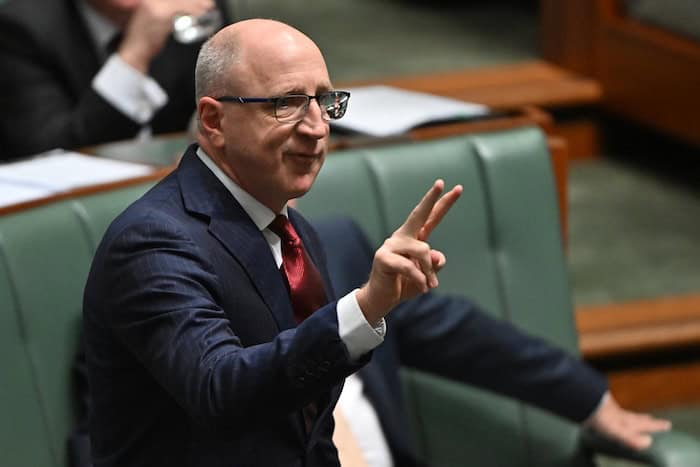
Labelling the lack of commitment a “disgrace,” McKellar encouraged the Government to “get this legislation up and get it passed and provide some certainty to small businesses around the country”.
Howarth said for a “cafe that wants to buy a new coffee machine and can be written off this financial year, that’s gone.” A Coalition Government would commit to a permanent, $30,000 asset write-off scheme, he said. Senator Pocock expressed frustration at the scheme’s politicising. “We have this constant politicking around the instant asset write-off, and yet, when I’ve moved amendments in the Senate to raise it and to make it permanent, the Coalition fled the chamber rather than actually saying, let’s give small business certainty,” he said.
When pressed on the issue, Leigh said it was “still something where we’re considering” before outlining other measures the Government had implemented for small business.
“The competition reforms are squarely focused on getting a better deal for small business, banning unfair contract terms [and] dealing with unfair trading practices.”
Dr Andrew Leigh, Assistant Minister for Competition, Charities, Treasury and Employment
Scrapping non-compete clauses expected to boost wages
The Government’s competition reforms around non-compete clauses would help address the skills shortage, as well as boost wages, Leigh said. It will make non-compete clauses unenforceable for workers earning under $175,000, which the Government estimates will boost wages by about $2,500 annually.
“One in five Australian workers were subject to a non-compete clause, a clause that stopped them from leading to a better job,” Leigh said. It wasn’t just “executives being put on gardening leave”, it was “gardeners who are being put on gardening leave. It’s early childhood workers, security guards, a whole range of workers in low wage professions”.
“That means for those affected workers, those one in five, that’s a boost of around $50 a week,” he said. This was “commensurate with the tax cut gains” also announced in the budget.

This change would not impede businesses. “You can still put in place non-disclosure agreements that ensure that your secrets can’t walk out the door,” he said. “And in fact, what’s going on at the moment is that many of these non-compete clauses are not legally enforceable. We’re tying up workers and firms in a thicket of legal regulations.”
Leigh also highlighted other broader competition policy changes: “The competition reforms are squarely focused on getting a better deal for small business, banning unfair contract terms, dealing with unfair trading practices, focusing on the Food and Grocery code now a mandatory code for those small businesses supplying to the supermarket centre,” he said.
Energy bill relief
All households and small businesses will receive $150 off their power bills under the budget’s energy relief package, extending a measure from the previous year. While applauded as a short-term relief measure, panel members questioned whether it tackled the structural issues pushing up energy costs.
“Electricity prices have doubled under this Government,” Howarth said. “If you go and talk to any small business, they will have had a 100% increase…under this Government.”
The temporary nature of the relief was highlighted as a concern, with businesses still facing uncertainty about energy costs in the medium to long term. The budget did not contain significant new measures to address energy infrastructure or market reform that might deliver more sustainable reductions in business energy costs.
Budget position
The panel delivered its verdict on the broader budget position, with forecasts showing a deficit of $27.6 billion in 2024-25, rising to $42.1 billion in 2025-26 and Government spending as a percentage of GDP increasing to 27%.
“Our debt to GDP ratios are good internationally,” McKellar said. “We don’t want to spend the inheritance. We don’t want to have an unsustainable budget position into the medium term with rising deficits and rising debt. And I think there is a concern at the moment that we haven’t got that sort of approach to structural balance over the course of the cycle.”
He advised spending as a percentage of GDP be reduced to 25% to help “build some insurance and weather future economic challenges”.
“If we’ve got the ability to also take on fundamental economic reforms, including real tax reform, not just clipping a couple of marginal rates, then I think that’s the ground we’ve got to prepare,” he said.

Pocock opposed public service cuts as a solution: “Cutting public services, it’s a false economy,” he said. “If we’re going after savings, let’s look at things like procurement. There is so much waste in procurement that can far better serve small and medium enterprises in Australia.”
High on productivity, low on inspiration
Leigh said growth remained high on the Government agenda, reiterating that childcare reform, skills investment and competition policy would help drive productivity. “We understand that productivity is ultimately a key driver of growth,” he said. Meanwhile, Howarth outlined Coalition commitments to boost productivity, including restoring the cap on taxes back to 23.9 per cent of GDP, making the instant asset tax write-off permanent and lower compliance costs for small businesses. “Regulation is killing this country and Coalition Governments haven’t been perfect in the past in this area as well, but it’s something that a Dutton-led Coalition Government will focus on,” he said.
Alberici pointed to an absence of “a new or inspiring vision for a changing Australia”. There was “nothing specifically that sandbags us against the trade storms that are swirling around us and helps protect us from geopolitical uncertainty that will undoubtedly undermine some of these Government figures and forecasts”, she said.
The IPA’s Budget Review recording is available online for the next two weeks here.