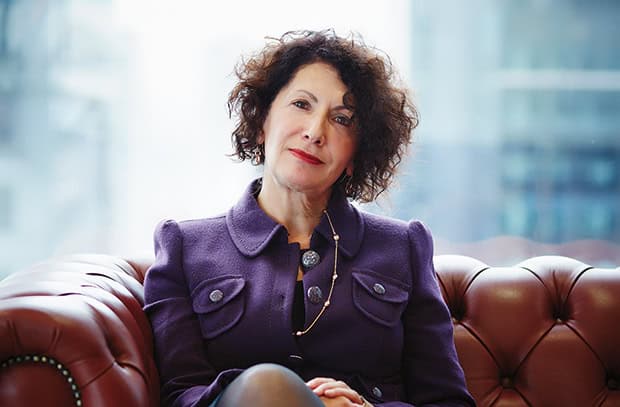
 Christian flew to New York to brief her bosses about the big plan and extract the cash needed to realise it. She couldn’t persuade them. “They had decided that China and India were the two markets that they were going to invest in because that was where the greatest returns would be,” she says.
Gutted, she did some soul-searching on the long flight home. She could not understand how such a “limited decision” could be made. So, she started engineering a management buyout, a still relatively new concept in Australia. Comments by senior D&B staff, dismissing the plan, were like a red rag to a bull. “It really tested my mettle,” she reflects. “It gave me the impetus to delve further.”
There was no shortage of suitors and AMP joined Christian and her management team, which took a 10 per cent stake in the new Dun & Bradstreet Australia.
By 2007, with employee numbers up from 400 to 700, AMP exited and Christian pulled off a $132 million deal with private equity firm Carnegie Wylie, now the Australian arm of Lazard.
In 2010, Christian and her team were looking at floating the business. Three weeks shy of listing, she advised the US-based Dun & Bradstreet as a matter of courtesy. To her surprise, they offered to buy back their former Australian business at a hefty premium. The eventual deal was done for $250 million, 10 times the 2001 sale price.
Christian stayed on until April last year. Subsequently, she has been carefully assessing invitations to join boards. She has a preference for boards with private equity backing so she can use her skills and be closer to the action. Her current directorships include a second-tier bank, a media company, three not-for-profits and two US roles that require late-night teleconferences and quarterly visits to the US.
“What I do bring to a board from my Dun & Bradstreet experience is some sensible commercial experience,” she says. “Having worked in the sector for nearly 30 years, I have become quite wary, and I can see signs of trouble probably more easily than most.”
Christian says lack of cash flow, absence of a business plan, a weak balance sheet and creditors paid outside of usual terms all raise alarm bells. “I can pick up these things. As a result of understanding these trends, I have a fairly good sense of the macro-economic environment and how that relates to organisations.”
In March 2013, Christian became president of Chief Executive Women, a lobby group aimed at getting more women in top roles. As a woman, she says she used to downplay her own success. “I used to act more like a female a few years back and allowed others to define the boundaries of my job role or career, and where I did achieve great success, I used to put it down to being an accident or luck. But if I really think back now, I just had this innate belief in the potential of the organisation and what it could do.
“You either do what a lot of people do and be happy enough with the status quo, or you can just go for it.”
[breakoutbox][breakoutbox_title]Life beyond D&B[/breakoutbox_title][breakoutbox_content]Christine Christian is on the boards of several international and Australian-based companies.
They include:
- chair of the Foundation Council, State Library of Victoria; and
- non-executive director of Members Equity Bank, Private Media, PowerLinx Inc, Policy and Economic Research Council (US), UNICEF Australia, Scottish Pacific Business Finance, Melbourne International Comedy Festival.
[/breakoutbox_content][/breakoutbox]