At a glance
- The circular economy hypothesis claims we should shift from a linear ‘take-make-dispose’ model to minimise waste.
- Australia’s reduction of resource use lags behind global averages.
- Businesses will need to adapt if supply chains and reporting requirements embrace circular principles.
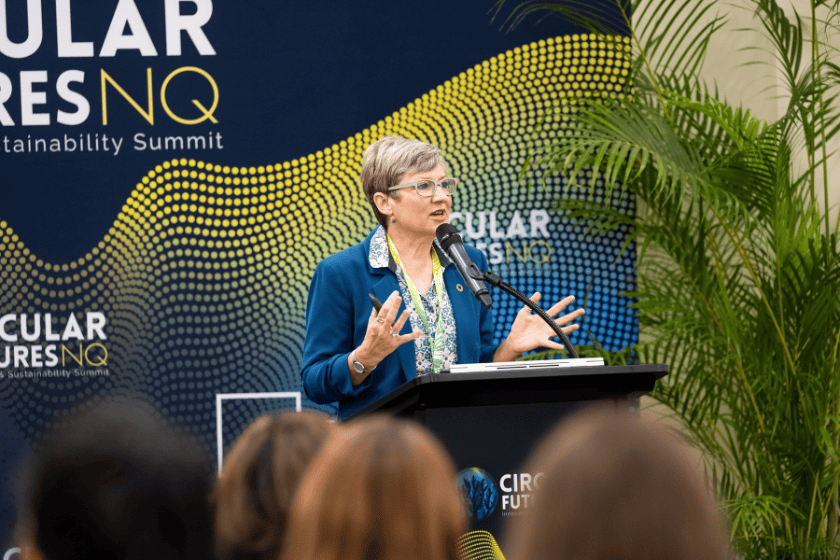
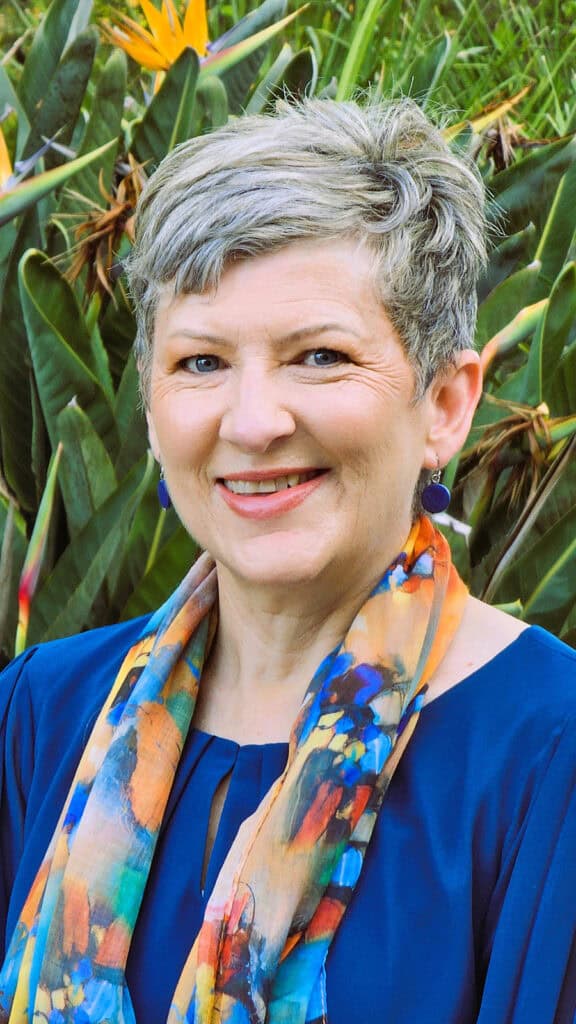
Dr Nicole Garofano’s journey to the forefront of Australia’s circular economy began unexpectedly. In her late 20s, the former travel agent was backpacking in the Caribbean when she stumbled upon an environmental education centre in Barbados. Her simple offer to volunteer, she says, “completely changed the course of my life”.
What began as a two-month stint became an eight-year job. By the time she left, Garofano had launched community recycling programs, written children’s books on climate change, and run numerous UN-funded projects.
From waste to worth
Seeing the problems of waste first-hand sparked in Garofano an interest in designing waste out of systems and keeping materials in use. Back in Australia, her practical experience helped her gain entry to a master’s and later a PhD program. Her research on plastics led her to the circular economy – a model designed to replace the linear “take-make-use-dispose” system.
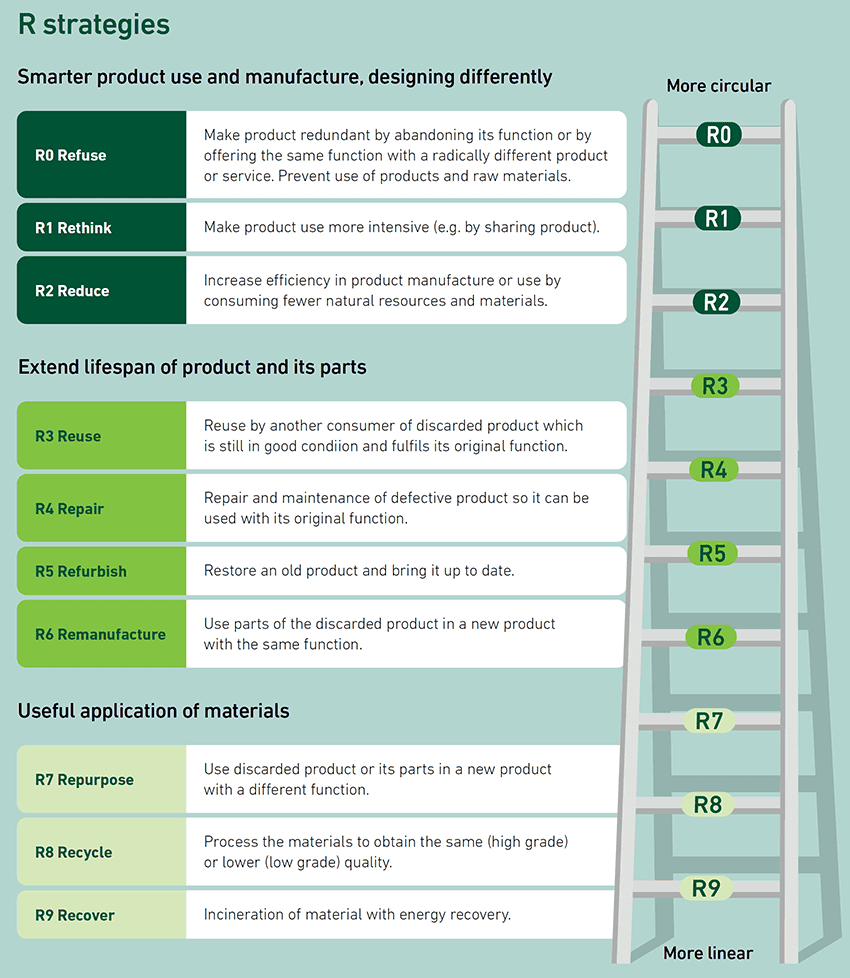
The circular economy is built on a hierarchy, often called the 10 R-Ladder, which prioritises the most impactful actions.
The 10 R ladder
Garofano argues the circularity movement is “revolutionary, in that we’re maintaining the value of those resources for far longer”. At Planet Ark, she led the Australian Circular Economy (ACE) Hub to guide businesses, support research, and influence policy. A key part of the conversation, she says, is the need to “start factoring in nature as part of the cost of doing business”.
“We need to price in externalities,” Garofano says. “We don’t actually cost a full cost of extraction to the planet to pull out the oil to make the plastic [we use].”
Australia’s slow turn
While Australia has a National Circular Economy Framework, progress is slow. In 2023, Australia’s circularity rate – the proportion of materials reused or recycled – was just 4.4%. This is well below the global rate of 7.2%. A 2024 CSIRO report notes that “the Australian economy uses four times the materials to fulfil each person’s needs compared with the world average”.
The Productivity Commission acknowledges the benefits of circularity but cautions that some activities have trade-offs: for example, transporting materials for recycling creates new carbon emissions.
And critics of circularity have deeper concerns. Some note that a truly circular economy is an impossible ideal: it runs into practical limits because many materials, especially plastics, lose quality with each recycling loop. Products not designed for disassembly make repair and recycling difficult and costly. Material degradation is a key issue; many materials, especially plastics, lose quality with each recycling loop, eventually becoming waste. And ultimately a circular economy confronts Newton’s second law of thermodynamics, which dictates that energy cannot be fully recovered or recycled.
New rules, new roles for accountants
Australia’s climate-related financial disclosure (CRFD) regime, which began this year, suggests the circular economy is becoming a business issue. It starts with large corporations, but Garofano argues that “over the next three years, smaller businesses will be part of this as well”. ASIC already advises that small businesses may need to provide sustainability data to larger customers. This creates a significant opportunity for accountants to guide their SME clients.
The changes are also global. The EU’s Ecodesign for Sustainable Products Regulation, which came into force in July, sets reporting requirements for businesses selling in the European Union. Firms supplying the EU – and their accountants – will need to understand these regulations.
What it could mean for your clients
Big companies are also piloting circular product lines, says Garofano, creating a ripple effect. “If you’re a small supplier into that value chain and you’re not keeping up with what they’re doing, then you’re going to get left behind,” Garofano says.
“If you’re a small supplier… and you’re not keeping up with what they’re doing, then you’re going to get left behind.”
Dr Nicole Garofano
She also argues that participating in the circular economy doesn’t require millions. The R-Ladder offers a practical guide for SMEs. Higher-order actions like refusing to buy unnecessary items or reducing resource use cost little. For example, reusing could mean hiring equipment instead of buying it, while refusing could mean using a car-share service instead of a company vehicle.
Finding the funds
Tapping into grants is not always easy for SMEs, but opportunities exist. Garofano advises that grants may not use the term “circular economy”’, so understanding the principles is key to spotting them. Funding sources with a circularity lens include the Recycling Modernisation Fund and the Future Made in Australia Innovation Fund. She suggests subscribing to newsletters like Planet Ark’s ACE Hub to stay informed.
The pendulum swings
Following financial difficulties at Planet Ark, Garofano’s role was made redundant, though the ACE Hub continues its work. She observes that, globally, sustainability action is in a temporary lull as political landscapes shift.
But she cautions businesses to be ready. The pendulum will swing back, and the pace will quicken. “We cannot continue at the pace of extraction and the pace of consumption that we have gotten ourselves used to,” she says.
See IPA’s full range of sustainability-related CPD here.