Those are just three pointers to how accountancy education is changing as the demands on accountants in the workforce change.
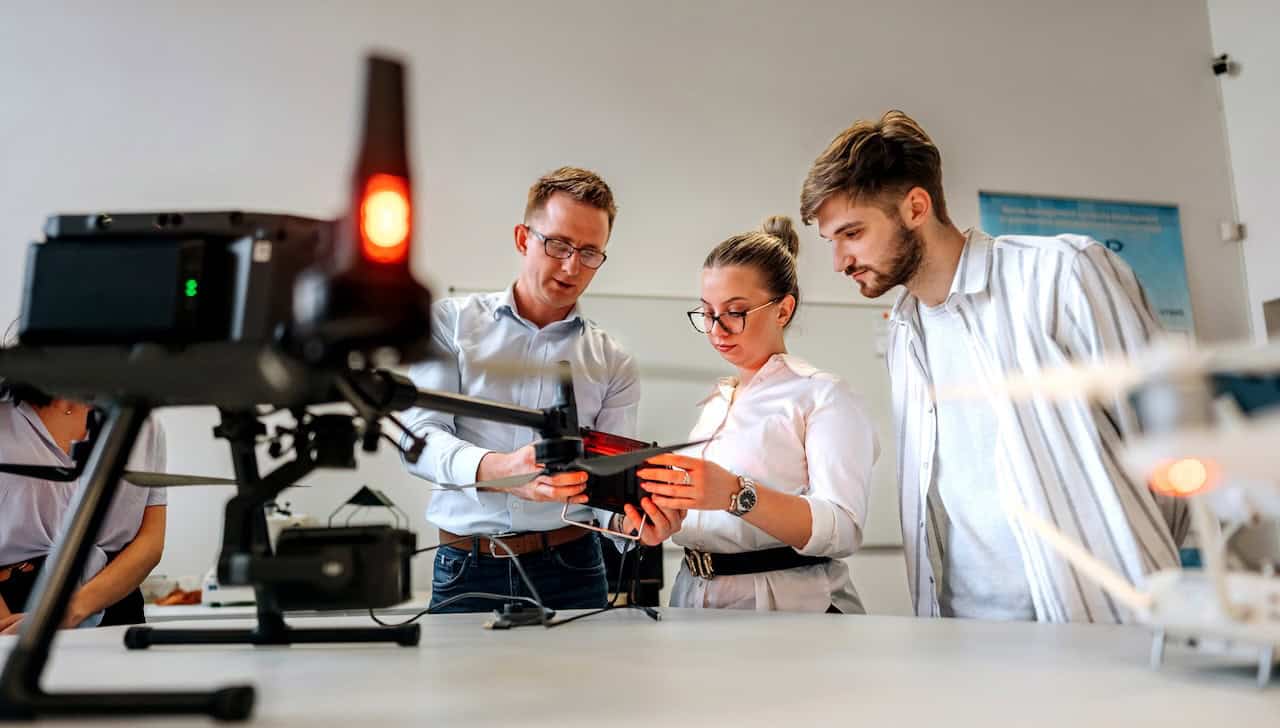
No longer is the focus on accounting standards and financial reporting – although educators agree that these remain important. Instead, students are learning to interpret data and standards, to give advice on how a business is run, and to better communicate. Nor do students spend their days listening to lectures and taking notes from the screen projector. Classrooms are more dynamic, and educators are putting an emphasis on experience.
It’s a response to the fact that accountancy – be it in private practice or in commerce – is less and less about producing management reports and performing process work. It’s increasingly about giving business or investment advice and adding value.
“The mantra I use with students is that accounting is business; it’s about managing the business – the numbers are the starting point for a business decision, they’re not the end product,” says Professor Michael Davern, chair of Accounting and Business Information Systems at the University of Melbourne.
“We’re getting them to be aware of the purpose and meaning of accounting information. What do the numbers mean? Why are they the way they are? And understanding how to interpret what’s happening in the business, rather than looking at applying a standard as a mechanistic process.”
Students learn both the concrete applications of the standards and their conceptual underpinning, which, says Davern, better equips them to adapt to changes in the profession, such as with integrated financial reporting.
“What we need to be developing as accountants,” he says, “is not just people who know what to do, but those who understand why change happens and be able to adapt to it.”
Putting theory into practice
The University of Melbourne’s Bachelor of Commerce degree has a required Organisational Behaviour unit, in addition to a strong quantitative foundation, to help students understand the people and communication skills that are an important part of an accountant’s role.
Universities are also involving more working accountants in their teaching. The University of Melbourne runs an ‘Executive in Residence’ program, where a business executive gives lectures for a fortnight to help demonstrate the theory the students have been learning.
Executives have included BHP Billiton vice-president for external reporting and governance Brett Rix, chair of energy and natural resources at KPMG Michael Bray, and Asia-Pacific accounts leader at Ernst & Young Annette Kimmitt.
At the UNSW’s School of Accounting, students in the ‘reporting for climate change and sustainability’ module have a weekly guest lecturer, ranging from environmental engineers to experts in the measurement of carbon emissions.
The school is also drawing on the profession and business to ensure its students are learning the sorts of skills that are required in the workforce. For example, Qantas is involved in the final-year managerial course by overviewing the course and giving feedback on content that is relevant to managerial positions at the airline – and, by extension, at other businesses.
From the first year, UNSW students learn teamwork and co-operation by doing simulation exercises on business case studies in groups. They download a podcast, do their research and then work together in class. “They’re accountable to each other and it’s experiential learning,” says Peter Roebuck, head of the university’s School of Accounting. “The lecturer is no longer a lecturer, they’re purely a facilitator.”
Planning ahead
Accountants in public practice are being hit with a raft of changes. As compliance work becomes less important, accountants are becoming business advisers and investment advisers, and so have to contend with the changes to the regulatory and licensing regime, known as FoFA.
Being a licensed financial adviser is more important than ever, as basic personal income tax returns start being automated, says the IPA’s executive general manager for member experience, Michael Linke.
The IPA professional accreditation courses, which run in conjunction with the University of New England in NSW, have units in financial planning, managerial finance and taxation law – which means that candidates for the Graduate Certificate in Professional Accounting and Master of Commerce (Professional Accounting) emerge as qualified financial planners, with RG146 compliance.
Professor Barry Cooper, head of the Accounting, Economics and Finance School at Deakin University, says accountants in public practice now spend much of their time as trusted business advisers, helping small business develop proposals to get bank loans or to look at the costings of new products.
One of the first things that accounting students at Deakin University learn is how to write a business plan. The university is in the process of revamping its accounting units and is the only program that has a compulsory stand-alone unit in professional ethics for those undertaking the accounting major.
[breakoutbox][breakoutbox_title]IPA moves to a 12-subject master’s degree[/breakoutbox_title][breakoutbox_excerpt]
The IPA’s current eight-subject Master of Commerce degree at the University of New England will include an additional four subjects from next year, following changes to Australian tertiary qualification regulations. The additional subjects will offer more scope to students to specialise in their chosen practice area.
[/breakoutbox_excerpt][breakoutbox_content][/breakoutbox_content][/breakoutbox]